
Foundation Settlement Repair for East Texas Homes
Foundation settlement isn’t a single event — it’s a slow transfer of weight from stable ground to ground that’s no longer stable, and it rarely announces itself until the damage is already visible. A door that used to close easily starts catching on the frame. A hairline gap opens along a baseboard. None of it looks urgent in isolation, which is exactly why settlement is one of the most under-addressed structural problems in Texas homes. Risen Home Leveling repairs settlement by treating the cause — the soil beneath the home — rather than the symptoms sitting on top of it.
How Foundation Settlement Develops Beneath an East Texas Home
Settlement happens when the load-bearing capacity of the soil beneath a foundation changes faster than the structure above it can tolerate. East Texas sits on expansive clay in most areas, and that clay behaves almost like a sponge that swells when saturated and shrinks dramatically once it dries out. A foundation resting on soil that’s constantly changing volume doesn’t sink evenly — one corner might settle while the opposite side holds firm, and that differential movement is what actually produces the damage homeowners notice. Drought years are often followed by a wave of settlement calls, because the soil shrinkage that occurred months earlier finally caught up to the structure above it.
Construction-related factors compound the problem. Fill soil that wasn’t properly compacted before a slab was poured, or a pier-and-beam home built on a shallow footing without accounting for regional soil behavior, both settle faster and less predictably than a home built with those conditions in mind. Once settlement starts, it tends to continue until something changes — either the soil stabilizes on its own, which is uncommon, or the foundation is given a new, more reliable point of support.
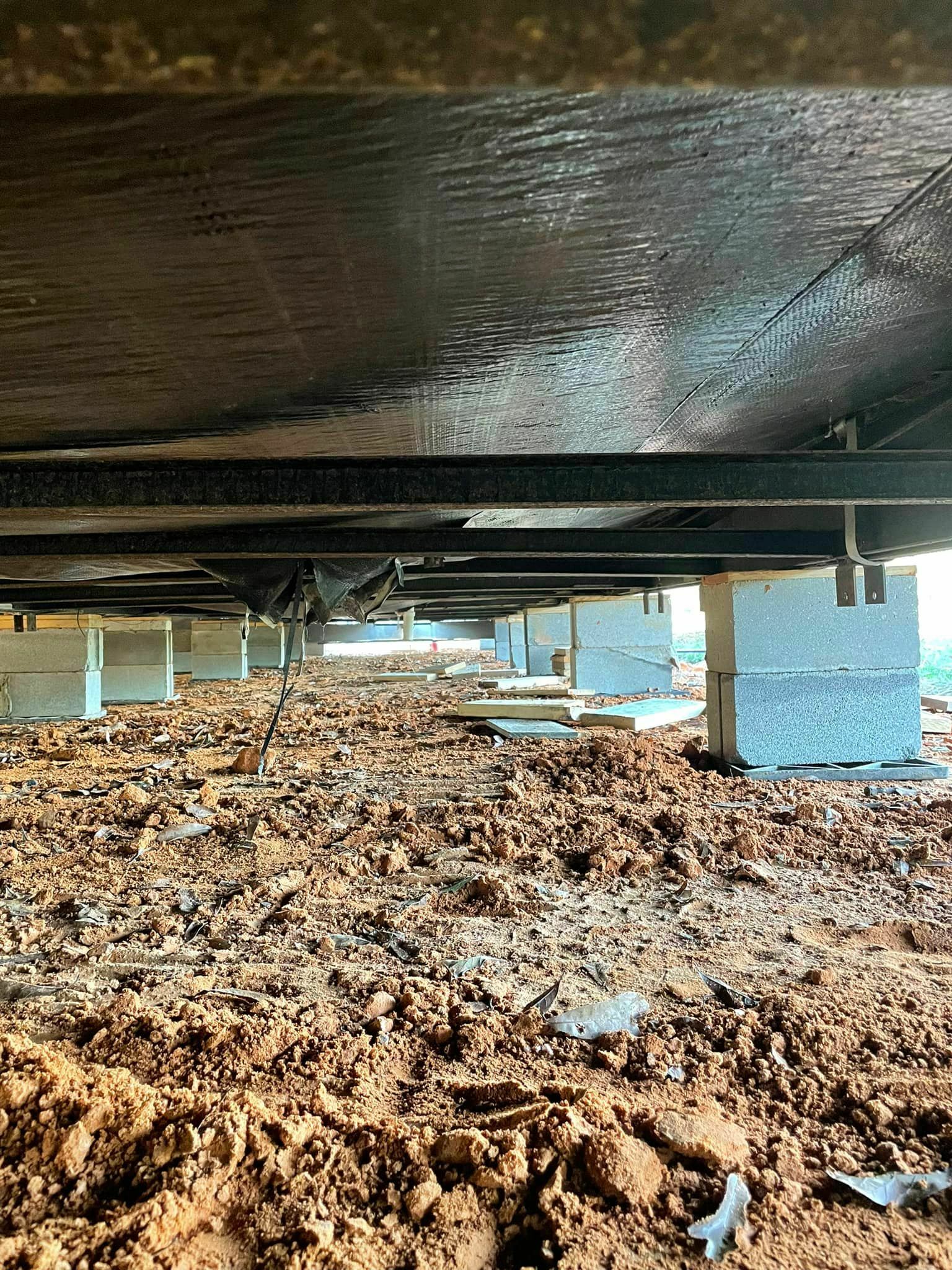
Recognizing the Early Stages of Settlement
The earliest signs of settlement often show up away from the foundation itself. Homeowners describe a crack that appears near a chimney where it meets the exterior wall, a gap opening between a fascia board and the roofline, or brick veneer separating slightly from a window frame. Inside, interior door frames may go slightly out of square before the door itself starts sticking, and cabinet doors in a kitchen can drift out of alignment even though nothing was touched. These are all indicators that one section of the home is settling faster than the rest.
As settlement progresses, the signs become harder to dismiss — visibly sloped flooring, cracks that reappear after being patched, or a noticeable list to an exterior wall. By the time settlement is obvious without close inspection, it has usually been active for a considerable period, which is why an evaluation at the first sign of movement matters more than waiting to see if it gets worse.
Underpinning and Pier Systems: How Settlement Is Actually Stopped
The only reliable way to stop foundation settlement is to change what the foundation is resting on. Underpinning does exactly that by installing structural piers that bypass the unstable surface soil and transfer the weight of the home to deeper, load-bearing strata that doesn’t shift with seasonal moisture changes. Depending on the soil profile and the severity of settlement, Risen Home Leveling installs either steel push piers, which are driven hydraulically using the weight of the structure itself as resistance, or helical piers, which are mechanically screwed into the ground and are often the better choice for lighter structures or areas with less resistant soil.
Once piers are set to a verified load-bearing depth, brackets connect them to the foundation, and in many cases the affected section can be lifted incrementally back toward its original elevation. The number and placement of piers isn’t standardized — it’s determined by the layout of the structure, the distribution of settlement, and the depth at which stable soil is actually found on that specific property.
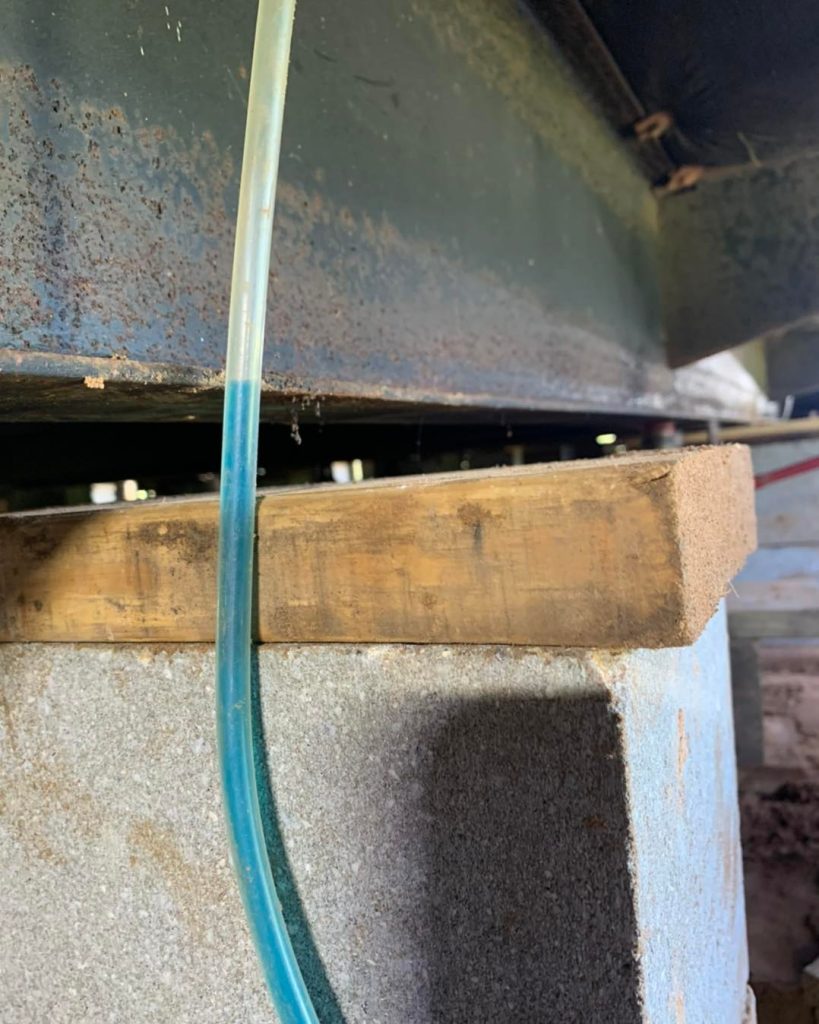
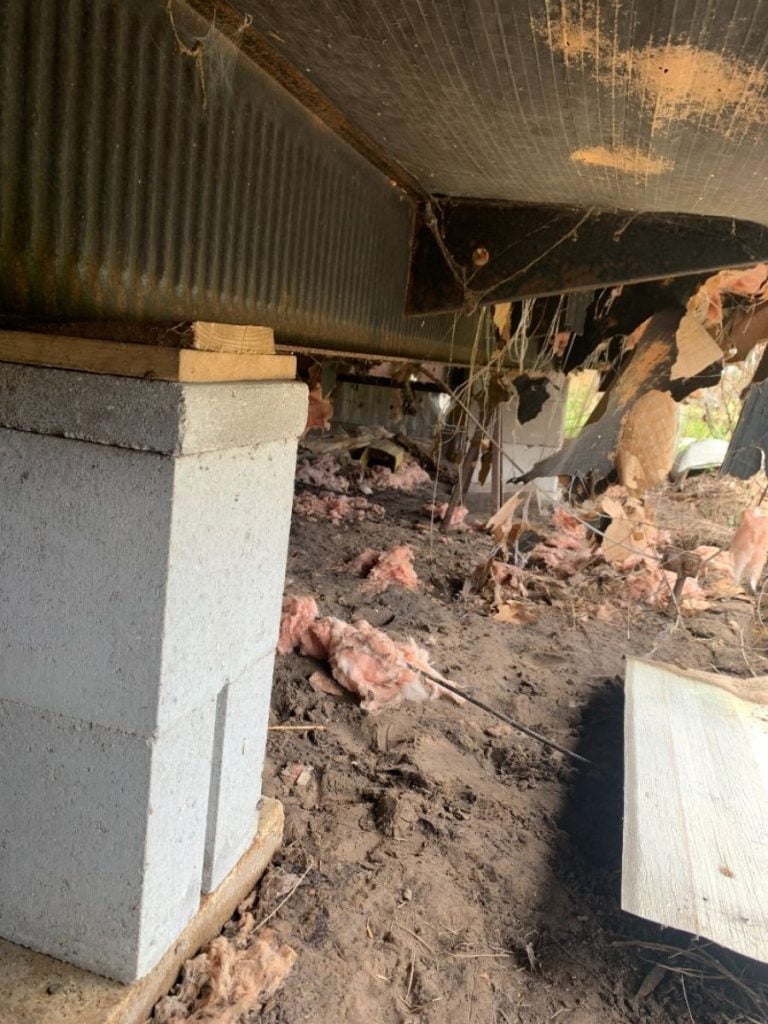
Why a Full Structural Evaluation Comes Before Any Repair Plan
Settlement repair done without a proper evaluation tends to under-correct the problem or place piers in the wrong locations entirely. Before recommending a repair plan, Risen Home Leveling documents elevation readings across the affected area, identifies which sections of the foundation are actively moving versus which have already stabilized, and evaluates the soil conditions specific to that lot. Two homes on the same street can have entirely different repair needs depending on drainage patterns, tree proximity, and how the original foundation was constructed.
What Happens After Piers Are Installed: Monitoring and Long-Term Stability
Installing piers stops further settlement, but the work isn’t finished the moment the last pier is set. Risen Home Leveling verifies elevations after installation to confirm the structure has responded as expected, and reviews drainage conditions around the home that may have contributed to the original problem. Correcting grading or extending downspouts away from the foundation is often part of the same visit, since leaving the same moisture conditions in place invites new settlement elsewhere on the property even after the original area is stabilized.
Homeowners should expect a brief adjustment period after lifting, particularly with older homes where interior finishes have settled into their shifted position over years. Minor cosmetic cracking in drywall as the structure re-settles into its corrected position is normal and typically resolves with simple patching.
Protecting Your Investment: The Cost of Waiting on Foundation Settlement
Settlement that goes unaddressed doesn’t stay contained to the area where it started. As one section of a foundation continues to sink, the structural load shifts onto areas that weren’t designed to carry it, which accelerates damage to framing, plumbing lines, and finishes throughout the home. What might have required piers along a fifteen-foot section early on can expand to a much larger repair scope if left for several more years.
Settlement also directly affects resale. Buyers and their inspectors look specifically for the warning signs described above, and undocumented foundation movement is one of the fastest ways to derail a sale or force a price reduction. A documented, professionally engineered repair gives homeowners something a patched crack never can: proof the underlying cause has actually been resolved.
Schedule a Foundation Settlement Repair Evaluation
If you’ve noticed a chimney crack, a door that won’t close right, or a slope developing in your flooring, the sooner Risen Home Leveling can evaluate the cause, the smaller the repair is likely to be. We’ll document the movement, identify the load-bearing depth beneath your home, and lay out a pier plan built for your specific soil conditions.
Contact Risen Home Leveling today to schedule your foundation settlement evaluation.