
Warning Signs You Need Foundation Repair
Doors and Windows That Stick or Won't Close Properly
When a foundation shifts, the door frames shift with it. A frame that’s no longer square causes doors to bind against the top corner, drag across the floor, or refuse to latch. Windows show the same pattern — they become difficult to open, develop gaps along one side, or no longer seal evenly.
This symptom is easy to dismiss as seasonal swelling, and sometimes that’s all it is. But when multiple doors or windows in the same area of the home are affected, it almost always points to foundation movement rather than humidity.
Sloping, Sagging, or Bouncy Floors
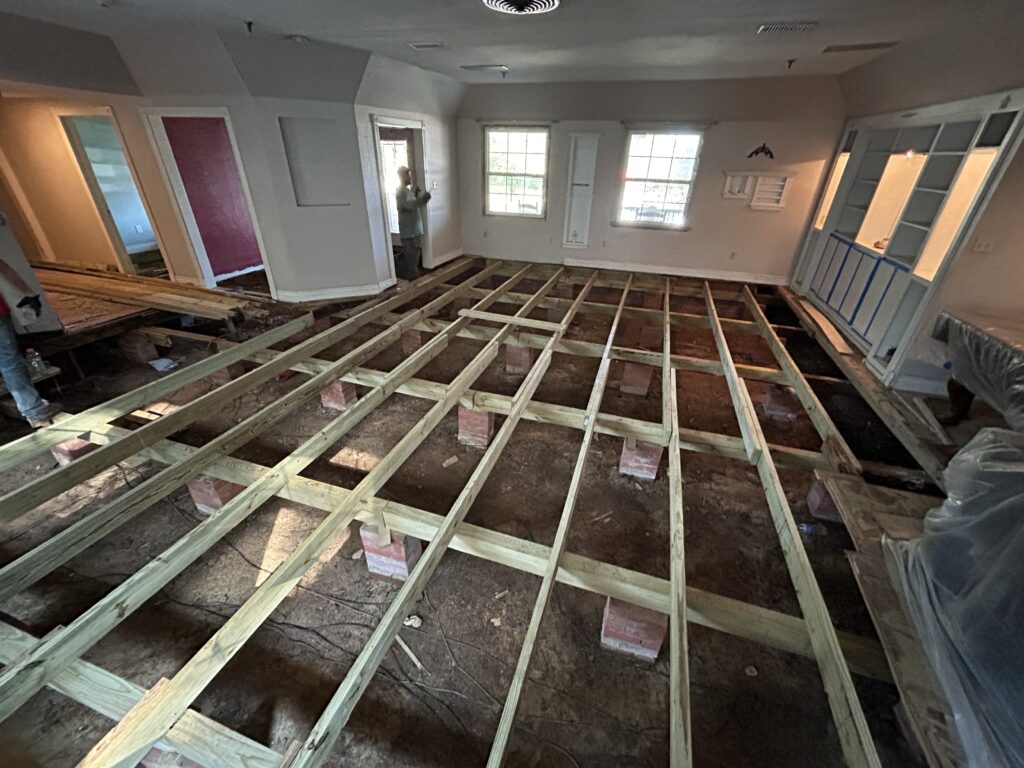
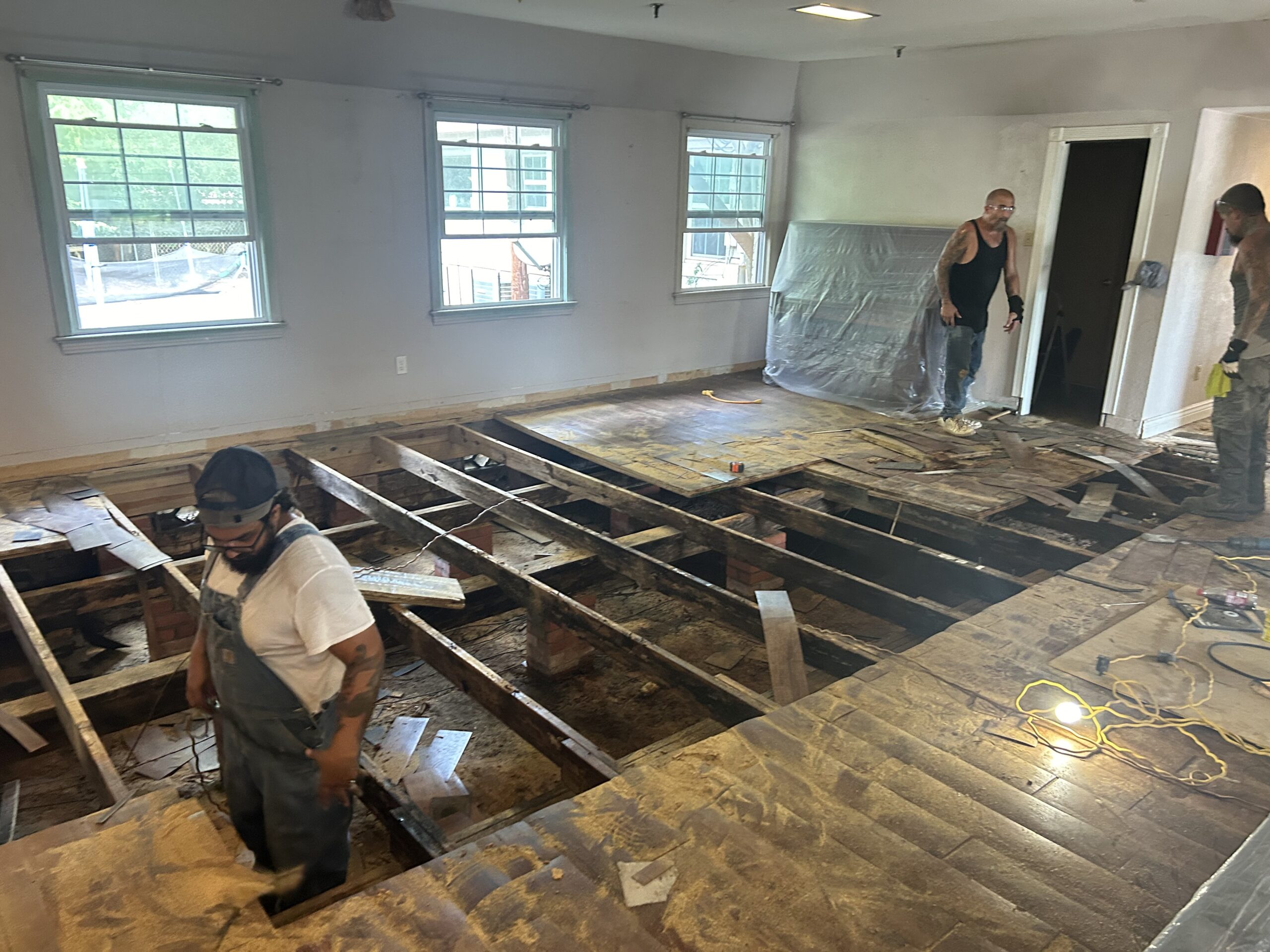
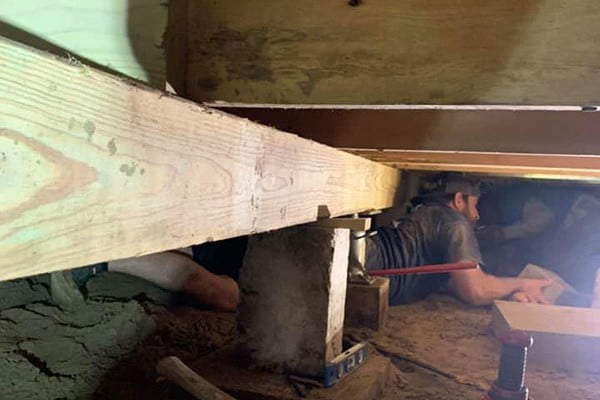
Floors that feel uneven underfoot, slope visibly toward one side of a room, or bounce and flex when walked on are a reliable indicator of foundation trouble. In pier and beam homes, this typically means one or more support points have settled, shifted, or deteriorated. Beams that have weakened from moisture or age no longer hold even elevation across the floor system.
A level placed on the floor can confirm what you’re feeling. A drop of more than an inch across a room is worth having evaluated by a professional.
Cracks in Interior Walls and Ceilings
Drywall cracks and plaster separations are common in older homes, but their location and shape matter. Diagonal cracks running from the corners of door or window frames are a classic sign of differential settling — meaning one part of the foundation is dropping while another stays in place. Stair-step cracks along brick or block walls follow the same pattern.
Horizontal cracks in walls, particularly in crawl spaces or along foundation walls, can indicate lateral pressure from soil movement and typically require more urgent attention.
Small hairline cracks that don’t grow are lower priority. Cracks that are wide, actively growing, or accompanied by other symptoms should be inspected promptly.
Gaps Between Walls, Floors, and Ceilings
As a foundation settles unevenly, the structure above it pulls apart at the joints. You may notice gaps forming where the wall meets the ceiling, where interior walls meet the floor, or where trim has separated from the wall surface. In more advanced cases, walls visibly lean or bow away from their original position.
These gaps often appear gradually and homeowners adjust to them. But they reflect real structural movement that compounds over time.
Exterior Brick or Siding Cracks
Cracks on the outside of the home — particularly diagonal cracks in brick veneer, separations along the mortar joints, or gaps forming around window and door frames — are often the clearest external evidence of foundation movement. Brick is rigid and doesn’t flex, so it cracks when the structure beneath it shifts.
Stair-step cracking along brick mortar lines is one of the most recognizable signs of differential foundation settlement and should be evaluated by a professional.
Moisture, Mold, or Rot in the Crawl Space
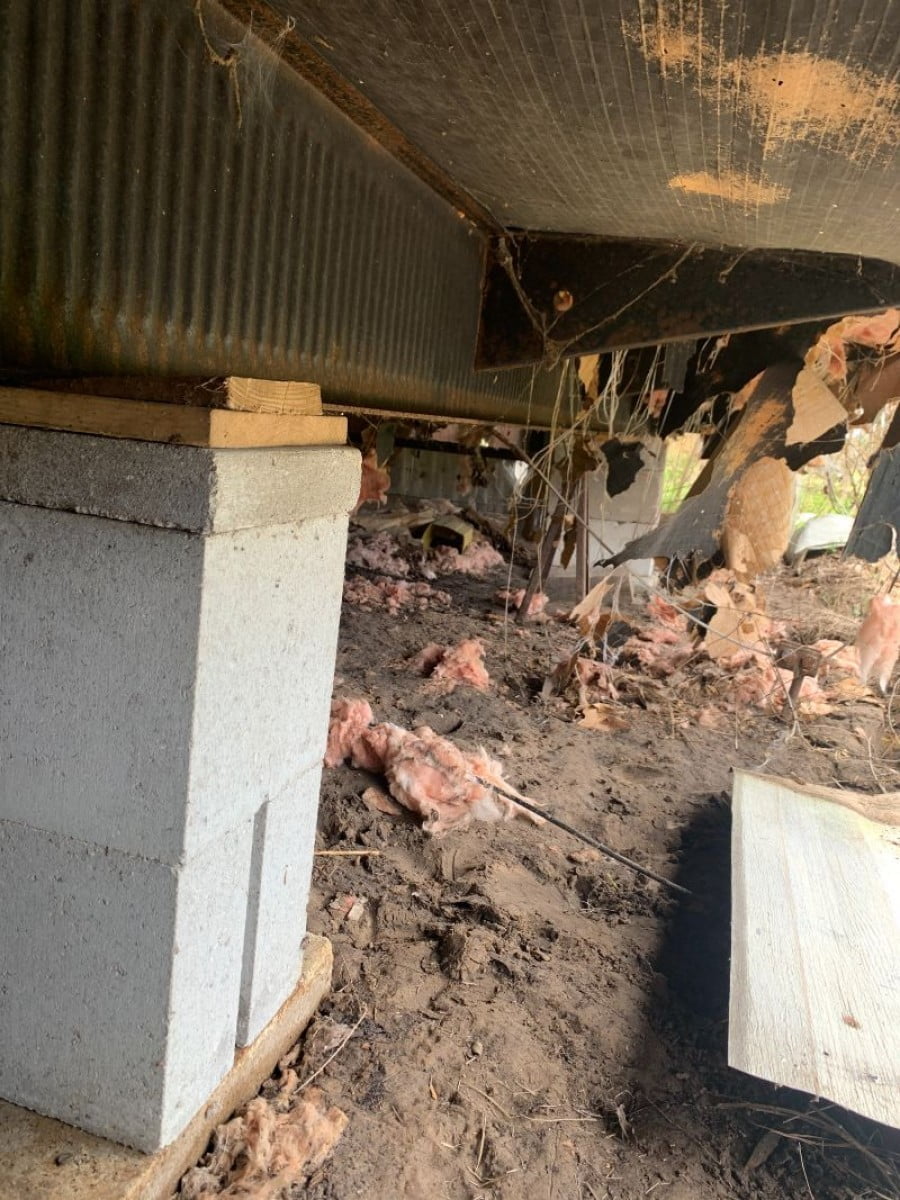
For pier and beam homes, the crawl space is where foundation problems often start. Pooling water, persistent dampness, mold growth on wood surfaces, and visibly deteriorated beams or joists are all signs that the foundation’s structural components are at risk. Wood that has absorbed long-term moisture loses its load-bearing capacity over time.
Poor crawl space ventilation and inadequate drainage around the home accelerate this process significantly. In East Texas, where clay soils hold moisture and seasonal rainfall is heavy, crawl space conditions deserve regular attention.
Chimney Separation or Leaning
A chimney that has begun to pull away from the exterior wall or lean visibly is a serious sign of foundation movement. Chimneys are heavy and sit on their own footing, which means they respond differently to soil movement than the rest of the home. When the soil beneath one shifts, the chimney moves while the house stays in place — or vice versa — creating a visible gap.
When to Call a Professional
Any one of these signs, taken alone, may or may not indicate a serious problem. When multiple signs appear together — especially sloping floors combined with sticking doors and interior wall cracks — that pattern points strongly to active foundation movement.
The right time to call is before the damage worsens. Foundation problems are significantly less expensive to correct in the earlier stages. Waiting until floors have dropped several inches or walls have separated substantially increases both the repair scope and the cost.
Risen Home Leveling offers free foundation inspections for homeowners throughout East Texas. If you’ve noticed any of these warning signs, contact us to schedule an evaluation. We’ll assess what’s happening beneath your home and explain exactly what, if anything, needs to be done.